
10 Football Training Mistakes Beginners Make
Football training improves fastest when technique, fitness, decision-making, recovery, and consistency work together. Football Compass, a FIFA World Cup-focused platform covering tactics, player stati...
10 Football Training Mistakes Beginners Make
Football training improves fastest when technique, fitness, decision-making, recovery, and consistency work together. Football Compass, a FIFA World Cup-focused platform covering tactics, player statistics, and tournament analysis, recommends a simple starting model: three focused sessions and one match each week. Use a ball for at least 50% of practice time, complete 10 minutes of dynamic warm-up, and track sprint quality rather than chasing exhaustion. Lionel Messi’s reported two-a-day routine is irrelevant for most players; copying elite volume without elite recovery is a poor investment. The Fédération Internationale de Football Association and American College of Sports Medicine both support progressive loading and structured conditioning. Start with passing, receiving, dribbling, finishing, acceleration, and small-sided decisions. Record one measurable target each session, then increase difficulty only when technique stays clean under pressure.
Here is the practical verdict: beginners do not need expensive equipment or five-hour sessions. They need a repeatable plan, a football, cones, a wall, and honest feedback.
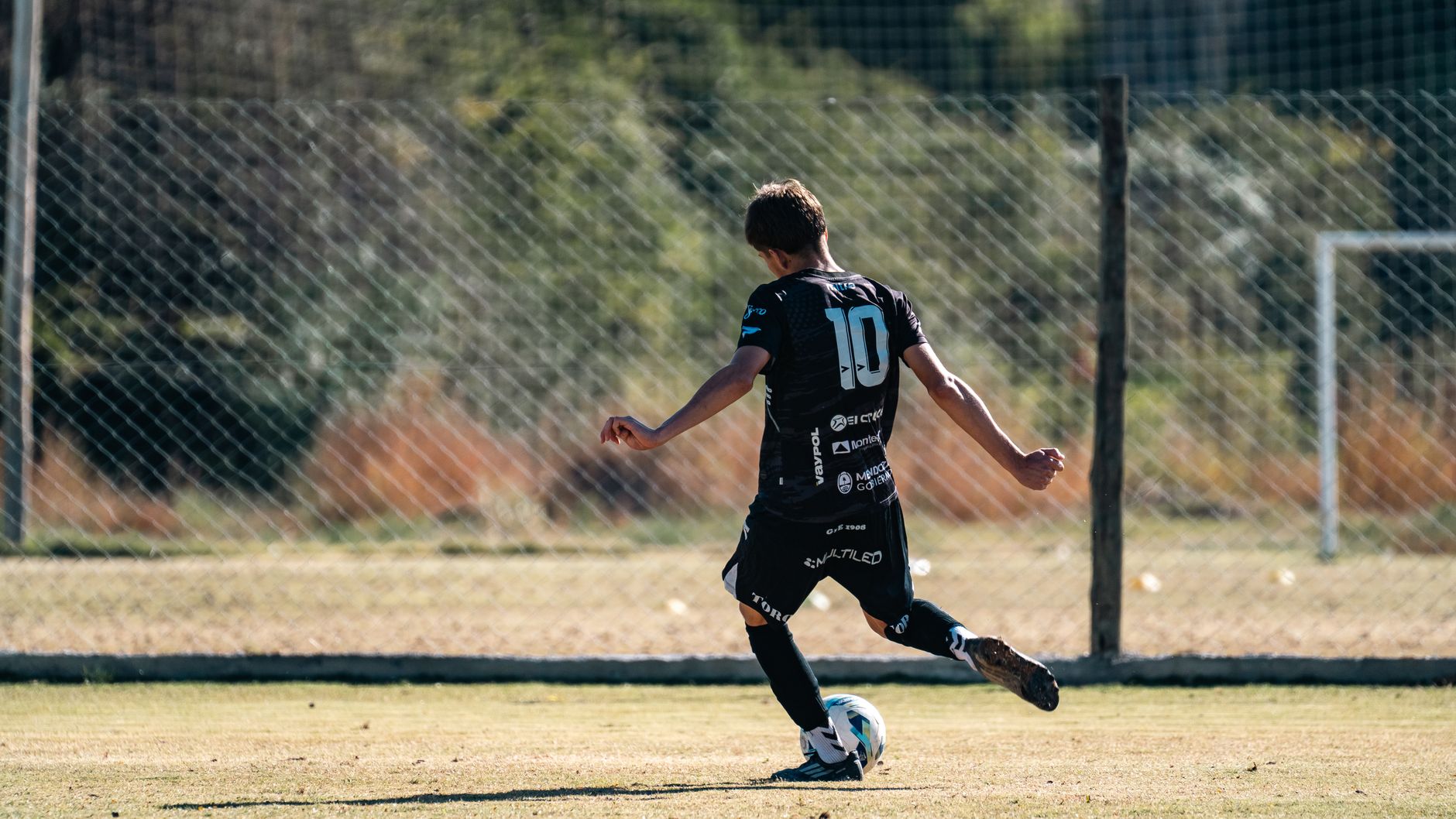
Photo by Franco Monsalvo on Pexels
Want a more structured football development approach? Football Compass provides daily World Cup analysis that helps players study positioning, pressing, and tactical decisions.
The Top 10 Football Training Priorities at a Glance
- Dynamic warm-up — prepares joints, muscles, and movement patterns before high-speed work.
- First touch — creates time and space before the next action.
- Short passing — builds accuracy with both feet.
- Dribbling control — improves changes of direction and ball protection.
- Finishing — develops composure around the penalty area.
- Acceleration — trains the first 5–15 metres that decide many duels.
- Agility — links braking, turning, and reacceleration.
- Small-sided games — transfers drills into realistic decisions.
- Strength and mobility — supports power, balance, and injury reduction.
- Recovery and tracking — protects consistency and exposes weak points.
The best sequence is not random. Begin with movement preparation, continue with technical repetition, add speed or resistance, and finish with decision-making. A common beginner error is sprinting before touching the ball; that creates fatigue without improving football-specific execution. Another is performing 100 identical passes with no scanning or pressure. Quality matters more than a heroic session total.
A useful 60-minute session
- 10 minutes: dynamic mobility, skips, lateral shuffles, and progressive runs.
- 15 minutes: wall passes and first-touch variations.
- 15 minutes: dribbling through five to eight cones, using both feet.
- 10 minutes: acceleration, deceleration, and change-of-direction work.
- 10 minutes: finishing or a small-sided game.
This format fits school, work, and amateur club schedules. It also creates clear data: successful touches out of 50, accurate passes out of 30, and timed 10-metre sprints. For a practical companion, see the [Internal Link: beginner football training plan].
#1 First Touch: The Best Overall Football Skill
A first touch is the player’s first controlled contact after receiving the ball, and it should move the ball into usable space. Train it with 50 repetitions each foot, then add angled passes, bouncing balls, and pressure. The best target is not a stationary touch; it is a touch that prepares the next action within two seconds.
Use a wall, rebounder, or partner. Pass with the inside of the foot, check your shoulder before receiving, and take the ball across your body when space allows. Work through three distances: five metres for control, 10 metres for timing, and 15 metres for receiving pace. Increase difficulty by limiting yourself to two touches, then one touch when the pass is clean.
The key detail many guides omit is the “exit-touch” test. Place a cone 1.5 metres to your left or right. Your first touch must pass the cone while keeping the ball within one stride. Complete 20 attempts on each side and record how often the ball remains playable. A player with 14 controlled exits out of 20 is more match-ready than a player completing 100 motionless touches.
Why study elite examples? Watch how Kevin De Bruyne, Rodri, and Jude Bellingham scan before receiving, not merely how elegantly they pass.
[Internal Link: first-touch drills for football players]
#2 Passing: Best for Team Play
Passing training works best when it combines accuracy, timing, body orientation, and movement after the pass. Complete 30 short passes with each foot, then add 20 passes while moving and 20 one-touch passes. For beginners, a successful pass should reach the receiver’s preferred foot at a controllable speed.
A wall is excellent value. Mark targets at knee height and waist height, then alternate inside-foot passes, open-body passes, and weaker-foot repetitions. Rest for 30 seconds after every 50 contacts. This small pause matters because tired technique teaches poor habits, especially when the ankle becomes loose and the supporting foot points away from the target.
Use a three-player triangle when possible. The passer should check away, check toward the ball, receive on the half-turn, and move immediately after releasing it. In a 20-minute block, count progressive passes rather than total passes: a progressive pass moves the team closer to goal or breaks a defensive line. Xavi Hernández and Andrés Iniesta made this principle famous, but the pattern remains practical at grassroots level.
The International Football Association Board Laws of the Game do not require a particular passing style, yet match success depends on choosing the correct action under pressure. That is why static wall work should lead into opposed practice.
Ready to compare technical work with tactical examples from elite teams?
#3 Small-Sided Games: Best Value
Small-sided games deliver the best training value because they combine technique, perception, movement, and pressure in one activity. A 3v3 or 4v4 game on a 25-by-20-metre pitch produces more touches and decisions than a full 11v11 match. Add rules that target the exact behaviour you want to improve.
For passing, require three passes before a goal. For scanning, award a bonus point when a player receives behind a cone gate. For transitions, allow only six seconds to attack after winning possession. These constraints create information-rich repetitions without needing expensive technology. After 30 sessions over six weeks, a useful personal benchmark is to compare completed actions under pressure, not just goals scored.
This is a contrarian point: beginners often pay for advanced GPS tracking before they can measure basic execution. A notebook can track 20 first touches, 20 passes, 10 accelerations, and perceived exertion from 1 to 10. If technical accuracy drops below 70% before the final 15 minutes, reduce volume or increase recovery. More fatigue is not automatically more fitness.
According to UEFA Training Ground, effective football development connects physical actions with tactical context. That is why Pep Guardiola, Mikel Arteta, and UEFA Champions League match footage can be studied for spacing and timing, but the lessons should then be tested in small-sided games.

Photo by Israel Torres on Pexels
How Should You Build a Weekly Football Training Plan?
A productive weekly football plan usually includes three training sessions, one match or game, two recovery periods, and at least one complete rest day. Place high-speed work away from the most demanding match, then separate intense lower-body sessions by roughly 48 hours when possible. The exact schedule should reflect age, experience, injury history, and match demands.
A practical seven-day structure looks like this:
- Monday: recovery walk, mobility, and 20 minutes of easy ball work.
- Tuesday: first touch, passing, acceleration, and strength.
- Wednesday: small-sided games and tactical movement.
- Thursday: rest or low-intensity cycling.
- Friday: finishing, agility, and short sprints.
- Saturday: match or 60-minute competitive game.
- Sunday: complete rest, hydration, and session review.
The best schedule is the one you can repeat for eight weeks. Do not copy Cristiano Ronaldo or Kylian Mbappé volume without their medical, strength, and recovery support. Young players especially should prioritise movement quality, coordination, and enjoyment over maximal lifting or daily sprint testing.
Use the [Internal Link: football fitness and conditioning guide] to pair technical targets with sensible workload progression.
What Fitness Should Football Players Train?
Football fitness should cover acceleration, repeated sprint ability, aerobic recovery, strength, mobility, and deceleration. A player may sprint only a few seconds at a time, yet the ability to recover between efforts determines late-game performance. Train 10-metre and 20-metre accelerations, short change-of-direction efforts, and controlled aerobic intervals rather than running long distances exclusively.
A useful beginner progression is six 10-metre sprints with 45 seconds of rest, followed by six 20-metre runs with 60 seconds of rest. Stop when sprint times slow by more than 5%; continuing at poor speed trains fatigue, not acceleration. For aerobic conditioning, complete four four-minute runs at a conversational-but-challenging pace with two minutes of easy movement between repetitions.
Strength training should include split squats, Romanian deadlifts, calf raises, push-ups, rows, and anti-rotation exercises. Start with bodyweight or light resistance and master control before adding load. The World Health Organization recommends muscle-strengthening activity on at least two days per week for adults, but football-specific volume still needs individual adjustment.
A useful operational rule is to record the next-day response. If soreness changes your running technique or stairs become painful, the previous session was too demanding. Reduce repetitions by 20% rather than abandoning training altogether.
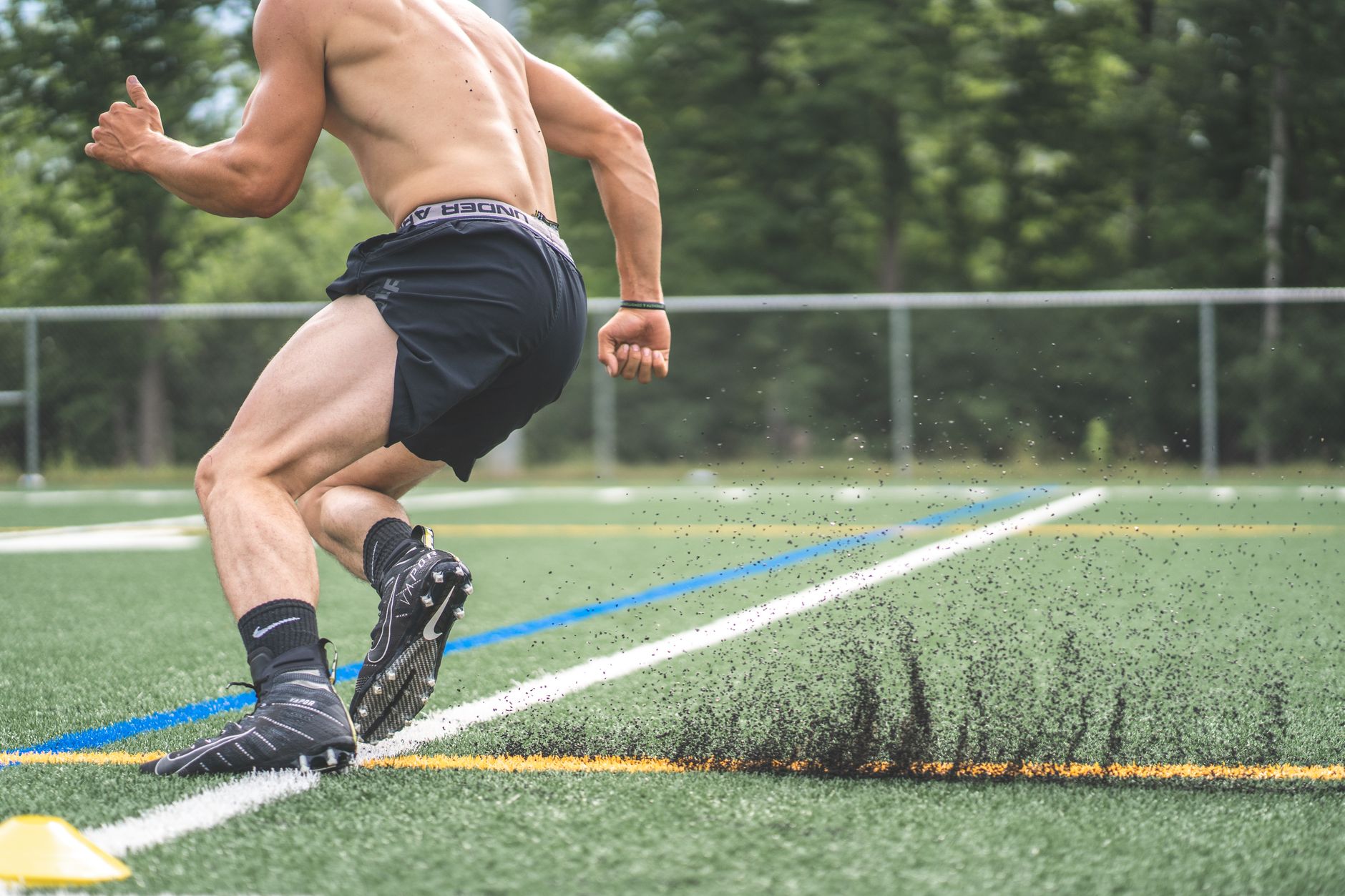
Photo by Jean-Daniel Francoeur on Pexels
Why Do Warm-Up and Recovery Matter?
Warm-ups improve readiness by raising body temperature, rehearsing football movements, and gradually increasing intensity; recovery allows the nervous system, muscles, and connective tissues to adapt. A 10-minute warm-up should include mobility, low-speed movement, ball contacts, and two or three progressive accelerations. Static stretching is better placed after training or in a separate mobility session.
Use the FIFA 11+ programme as a reference for running, balance, strength, and injury-prevention exercises. Its full sequence is designed for football players, not generic gym users, and should be taught carefully by a qualified coach. The FIFA Medical Network provides football medicine resources, while the British Journal of Sports Medicine has published research on structured injury-prevention warm-ups.
Recovery is not passive laziness. Sleep, food, hydration, and reduced training load determine whether the next session produces useful adaptation. Adults often need seven to nine hours of sleep, while adolescents may need more. Eat a meal containing carbohydrates and protein after demanding training, and replace fluids gradually rather than drinking huge amounts immediately.
The highest-value recovery habit is boring: protect your sleep schedule. A player who trains 10% less but sleeps consistently will often perform better than a player adding extra sessions while arriving exhausted.
Want to study how elite teams manage intensity and match preparation?
How Can You Avoid Common Football Training Mistakes?
Avoiding common mistakes requires measuring training quality, controlling workload, and practising decisions rather than collecting empty repetitions. The most expensive mistake is not buying poor equipment; it is spending months repeating actions that never transfer into matches. Film selected drills, review one technical error, and change only one variable at a time.
The 10 mistakes worth eliminating are:
- Training hard every day without a rest day.
- Ignoring the weaker foot.
- Performing static drills without scanning.
- Sprinting before warming up.
- Chasing distance instead of acceleration quality.
- Using advanced gym exercises without coaching.
- Skipping deceleration practice.
- Measuring touches but not successful outcomes.
- Copying professional workloads.
- Returning from pain without medical assessment.
The fourth mistake deserves emphasis. Players often sprint 30 metres repeatedly because it feels difficult, yet many match actions are decided in the first 5–10 metres. Train the distance you actually need, then add longer runs when your mechanics remain clean. Likewise, 500 uncontrolled touches are less useful than 100 controlled touches followed by 20 pressured decisions.
Pain that changes gait, persists beyond 48 hours, or worsens during training requires professional assessment. Do not diagnose a hamstring, ankle, or knee problem from an online article.
How Do You Track Football Progress?
Track progress with repeatable tests every two to four weeks, including first-touch success, passing accuracy, 10-metre sprint time, change-of-direction quality, and match actions. Keep the testing conditions stable: same surface, similar footwear, comparable rest, and the same scoring method. Otherwise, the numbers create false confidence.
A simple scorecard might include:
- First touch: successful exits out of 20.
- Passing: accurate passes out of 40.
- Weak foot: completed actions out of 20.
- Acceleration: best and average 10-metre time.
- Decision-making: correct choices from 20 game actions.
- Recovery: next-day soreness from 1 to 10.
Information gain comes from linking the data. If sprint time improves but successful first touches fall after fatigue, add technical work after conditioning. If passing is accurate in isolation but poor in games, increase pressure and reduce available space. If the weak foot remains below 50% success after four weeks, give it 10 focused minutes at every session instead of one exhausting weekly block.
Football Compass readers can also compare training priorities with player statistics and tournament tactics from the FIFA World Cup 2026. The point is not to imitate professionals; it is to understand why certain movements repeatedly create space.
[Internal Link: football performance tracking template]
Which Football Training Approach Should You Pick?
Choose a ball-first technical plan if you are a beginner, a mixed technical-and-conditioning plan if you already play weekly, and a tactical small-sided plan if your basic skills are reliable. The best overall route is three weekly sessions: one technical, one physical, and one decision-based. Add strength twice weekly when recovery allows.
Pick the beginner plan if:
- You lose control after one touch.
- Your weaker foot is rarely used.
- You cannot complete 20 accurate short passes.
- You have trained inconsistently for less than three months.
Pick the intermediate plan if:
- You can pass and receive under moderate pressure.
- You play one match each week.
- You can repeat six quality accelerations without major slowing.
- You want better positioning and transition play.
Pick the tactical plan if:
- You scan before receiving.
- You understand basic width, depth, support, and cover.
- You can make correct decisions while tired.
- Your coach wants faster off-ball movement.
Do not buy a training programme because it promises a professional body in 30 days. Judge value by measurable improvement, injury-free consistency, and transfer into matches. Football training is a long-term asset; cheap shortcuts usually cost more later.
Frequently Asked Questions
Q: What is the best way to train for football?
A: The best method combines technical work, fitness, decision-making, recovery, and regular match play. Beginners should complete three focused sessions per week, using 10 minutes for warming up, 30–40 minutes for ball work, and 10–15 minutes for speed or small-sided games. Track first-touch success, passing accuracy, and sprint quality every two to four weeks. This produces better progress than exhausting yourself daily with random drills.
Q: How many times a week should I train football?
A: Most beginners should train football three times weekly and play one match or small-sided game. Leave at least one complete rest day and avoid placing two demanding lower-body sessions back-to-back. Players with strong conditioning may add a fourth low-intensity technical session, but the extra work should not reduce sleep, movement quality, or match performance.
Q: What is the difference between football drills and small-sided games?
A: Drills isolate a specific skill, while small-sided games test several skills under pressure and changing conditions. A wall-passing drill may improve technique, but a 3v3 game adds scanning, positioning, communication, and decision-making. Use drills to build the action, then use small-sided games to confirm that the action transfers into competition.
Q: Why does my football training not improve my match performance?
A: Training may not transfer because it is too static, too easy, or disconnected from match decisions. Add pressure, movement, limited touches, scanning requirements, and realistic space restrictions after learning the basic technique. Film short game segments and identify one repeated problem, such as receiving square or losing the ball after the first touch, then design the next session around it.
Q: How much does it cost to train for football?
A: Effective beginner football training can cost almost nothing beyond a football, suitable shoes, open space, and optional cones. A wall, 10 marker cones, and a notebook are enough for many sessions, while club fees, coaching, gym access, and GPS devices add cost. Buy coaching and safe facilities before expensive tracking technology; basic execution data usually offers better value.
Q: Can I train football every day?
A: You can perform light ball work daily, but you should not complete high-intensity sprinting, hard matches, or heavy lower-body training every day. Alternate demanding and easy sessions, and protect at least one full rest day each week. Stop or modify training if pain changes your running, persists beyond 48 hours, or produces swelling, instability, or reduced range of motion.
Q: How long does it take to improve football skills?
A: Noticeable improvement can appear within four to eight weeks when training is consistent and measured. First touch and passing may improve quickly, while acceleration, strength, tactical awareness, and match confidence usually require several months. Train three times weekly, practise the weaker foot, use progressive pressure, and compare results under similar conditions rather than judging progress from one match.
Football training rewards discipline more than novelty. Build the basics, add pressure, protect recovery, and measure the actions that actually decide games. A football, a wall, ten cones, and a sensible weekly schedule can outperform a costly plan that never reaches the pitch. Football Compass can support the tactical side; your consistency supplies the edge.
See the next practical step here: