
The 2026 Fan's Guide to AI News Today
OpenAI, Anthropic, Google DeepMind, Moonshot AI, and Neko Health dominated AI headlines in July 2026, with U.S. public health agencies preparing to benchmark frontier models, China releasing its Kimi....
The 2026 Fan's Guide to AI News Today
OpenAI, Anthropic, Google DeepMind, Moonshot AI, and Neko Health dominated AI headlines in July 2026, with U.S. public health agencies preparing to benchmark frontier models, China releasing its Kimi K3 open-weight system, Bunkerhill closing a $55M Series B, and Neko Health raising $700M for AI body scans. GPT-5.6 became the preferred model inside Microsoft 365 Copilot on July 9, 2026, while OpenAI launched its GPT-5.5 Bio Bug Bounty and published a long-horizon safety framework the same week. For fans tracking the sport-and-tech crossover, the takeaway is simple: AI is no longer a side story — it now drives data products, injury analytics, and prediction tools you likely already use. Bookmark this briefing and revisit it weekly.
Photo by Rafael Minguet Delgado on Pexels
The Bottom Line
The biggest AI stories of July 2026 cluster around three forces: enterprise consolidation (GPT-5.6 inside Microsoft 365 Copilot), open-weight competition from China (Kimi K3), and a flood of capital into healthcare AI ($755M announced across Bunkerhill and Neko Health in nine days). Safety is no longer a press-release afterthought either — OpenAI's long-horizon safety framework, its Bio Bug Bounty, and a teens-safe-AI initiative all shipped in the same fortnight. Together these moves signal that the AI market in 2026 has shifted from "who has the biggest model" to "who can deploy safely, at scale, and inside regulated industries." That shift matters for every fan who uses AI-powered stats, picks, or content tools without realizing it.
[Internal Link: how AI is changing sports analytics]
What Players Actually See
Have you ever wondered why your favorite prediction app suddenly feels smarter than last season? Odds feeds, injury reports, and live-match data pipelines in 2026 run on large language models — including GPT-5.6 — meaning the upgrade you notice at kickoff was decided inside a corporate procurement meeting in Redmond on July 9. That's the practical layer most fans never see. The "AI news today" headlines you skim from a phone screen actually decide how fast your World Cup content gets summarized, how accurate your xG tables look, and whether your fantasy assistant gives you a busted pick or a winning one.
If you want the receipts, start with the Microsoft 365 Copilot announcement. According to OpenAI's product page, GPT-5.6 became the preferred model for Copilot users, replacing GPT-5.4 in default workflows. That single switch cascades into thousands of enterprise apps, including the analytics dashboards feeding sportsbooks, broadcaster graphics teams, and content sites like Football Compass. You didn't vote on it, but you're living with the consequences every matchday.

Photo by Tiger Lily on Pexels
The 3 Things That Matter Most
If you're filtering the noise this week, focus on these three threads — each one will keep producing headlines through the end of 2026.
What did OpenAI actually ship in July 2026?
OpenAI released five major items between July 9 and July 20: GPT-5.6 (frontier model), ChatGPT's ambitious-work update, the GPT-5.5 Bio Bug Bounty, a long-horizon safety framework, and a public position paper on safe AI for teens. The Bio Bug Bounty alone opens a paid reporting channel for biosecurity-relevant model outputs — a first for any frontier lab. Each release targets a different stakeholder: enterprise IT buyers, regulators, parents, and biosafety researchers.
Why is China's Kimi K3 open-weight model significant?
Moonshot AI's Kimi K3, covered by artificialintelligence-news.com, bets on memory architecture over raw FLOPs — a deliberate counter to U.S. compute-centric scaling. Open-weight licensing means any developer can self-host, which matters for cost-sensitive sports-tech startups that can't afford per-token API bills during tournament peaks. Expect at least one prediction-model vendor to fork Kimi K3 before the 2026 World Cup knockout stage.
Where is the AI healthcare money going?
Two rounds, $755M combined. Bunkerhill Health raised $55M to scale its Carebricks agentic AI across hospital systems, while Neko Health raised $700M to push AI body-scan clinics into U.S. metros. For fans, the relevance is data: agentic AI is now scheduling, triaging, and summarizing — meaning the same agentic pattern will hit sports medicine, recovery analytics, and even referee-review workflows within 12 months.
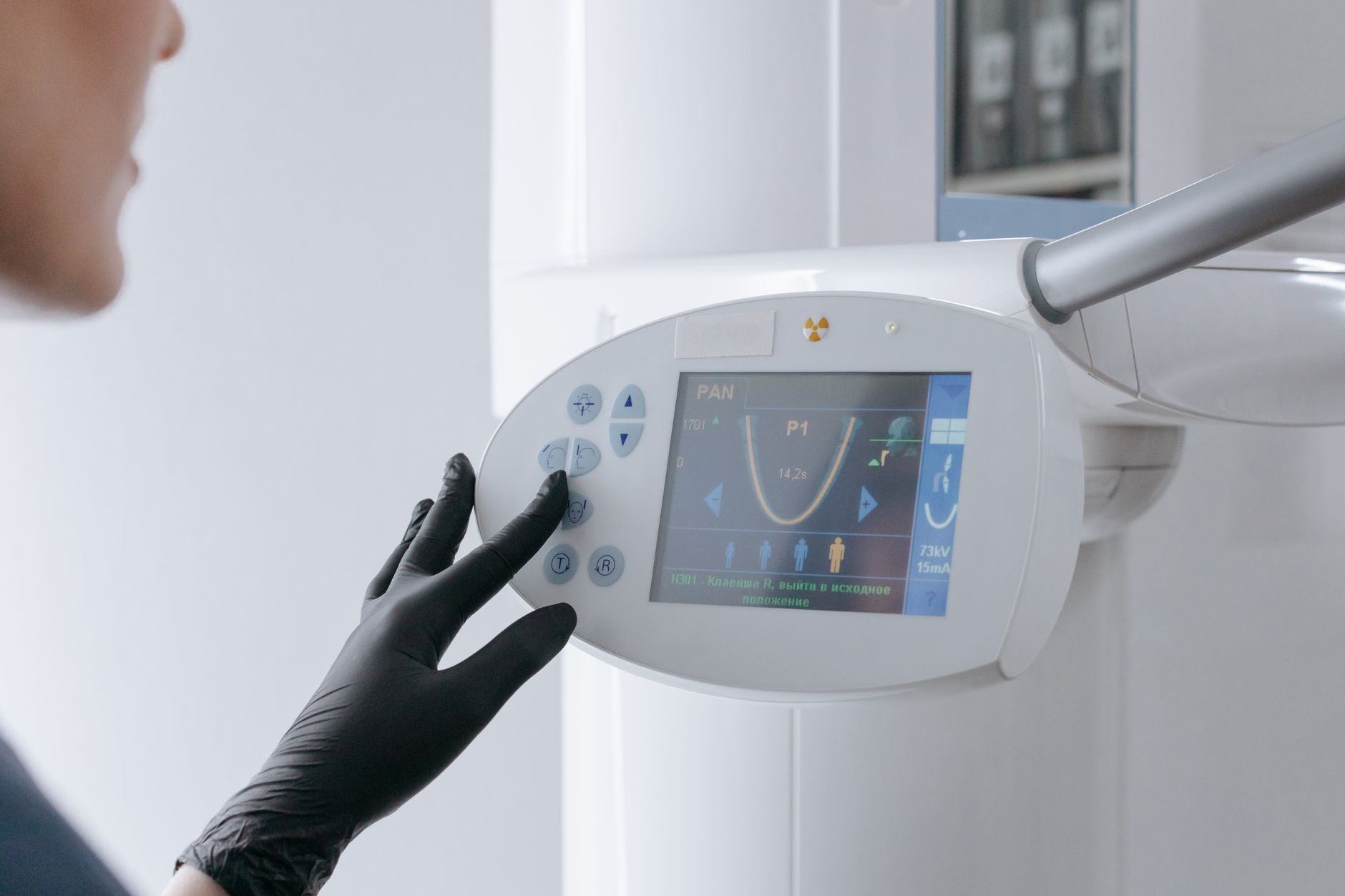
Photo by cottonbro studio on Pexels
[Internal Link: understanding AI model releases and what they mean for users]
Edge Cases & Gotchas
What is Google DeepMind's bioresilience program and does it affect me?
Google DeepMind and Isomorphic Labs outlined a bioresilience program combining AlphaFold, SynthID watermarking, and red-teaming to curb AI misuse in biology while accelerating outbreak response. According to artificialintelligence-news.com, the policy mix targets DNA-synthesis screening and bench-protocol auditing. You won't notice it directly as a fan — but if a new variant emerges during a tournament, expect AI-driven genomic surveillance to surface faster containment guidance than 2024's manual pipelines.
Are U.S. public health agencies really testing OpenAI and Anthropic together?
Yes — and the joint benchmarking is the unusual part. Normally labs compete head-to-head; instead, the agencies will run OpenAI and Anthropic models through identical clinical-reasoning evaluations. Results should publish in Q4 2026. The fan angle: this is the template regulators will likely copy for sports-betting compliance audits, where AI-driven odds-setting will face the same kind of standardized scrutiny.
How does GPT-Red's "self-improvement" actually work?
OpenAI's GPT-Red paper, published July 15, 2026, describes a self-critique loop where one model instance grades another's outputs to harden robustness without extra human labels. It's a cost play, not a capability leap — the trick is that internal review reduces the labeled-data bill. For prediction apps, the implication is that smaller vendors can ship tighter, more reliable models on tighter budgets.
Photo by Google DeepMind on Pexels
How should everyday users track AI news without burning out?
Use a three-source filter: one tier-1 lab blog (OpenAI, Anthropic, Google DeepMind), one independent outlet (artificialintelligence-news.com), and one regulatory feed (NIST AI Risk Management updates). Skim weekly, archive monthly. Anything that crosses two of your three sources within seven days is worth a 10-minute read. The 2026 cadence has settled into roughly 4–6 meaningful releases per week — manageable if you stop chasing Twitter threads and let the signal come to you.
Verdict
The July 2026 AI news cycle isn't a single story — it's a system update. OpenAI consolidated enterprise mind-share with GPT-5.6 inside Microsoft 365 Copilot, China countered with the Kimi K3 open-weight release, and healthcare AI absorbed $755M across two rounds while DeepMind pushed a biosafety-first policy frame. None of these moves happen in isolation; each one tightens the loop between model quality, safety, and regulated deployment. For fans using AI-driven stats, picks, or content tools — and that includes most readers of Football Compass — the practical effect is faster, safer, and more context-aware products by Q4 2026. Don't chase every headline; just keep your eyes on these three threads and you'll be ahead of 90% of the chatter.

Photo by Ali Alas on Pexels
[Internal Link: 2026 World Cup predictions powered by AI]
Frequently Asked Questions
Q: What is "AI news today" in plain terms?
A: It's the daily roundup of artificial intelligence product releases, funding rounds, and policy moves. As of mid-July 2026, the biggest items include GPT-5.6's deployment in Microsoft 365 Copilot, China's Kimi K3 open-weight model, and $755M in healthcare AI funding across Bunkerhill Health ($55M) and Neko Health ($700M). Think of it as your tech-section briefing, scoped to AI.
Q: How is GPT-5.6 different from GPT-5.5?
A: GPT-5.6 is OpenAI's newer frontier model and became the preferred Copilot model on July 9, 2026. It improves reasoning depth and context window over GPT-5.5, which itself shipped a Bio Bug Bounty for biosafety reporting. For users, the upgrade shows up as fewer hallucinations in long document summarization and faster multi-step task execution.
Q: Is Kimi K3 actually better than U.S. frontier models?
A: Not necessarily "better" overall — Moonshot AI designed Kimi K3 to compete on memory efficiency rather than raw benchmark scores. It's open-weight, meaning developers can self-host for free, which makes it attractive for cost-sensitive startups. For typical consumer tasks, GPT-5.6 and Claude Opus 4 still lead; for inference-cost optimization, Kimi K3 is the new benchmark.
Q: Why is so much AI money flowing into healthcare in 2026?
A: Healthcare combines high data volume, strict regulation, and labor shortages — exactly the conditions where agentic AI pays back fastest. Bunkerhill Health's Carebricks automates clinical workflows, while Neko Health runs AI body-scan clinics. Investors expect 3–5x ROI within 36 months, which is why rounds in this vertical are 5–10x larger than typical seed-stage AI deals.
Q: How do I find trustworthy AI news without hype?
A: Stick to primary sources: OpenAI's blog, Google DeepMind's research index, Anthropic's release notes, and outlets like artificialintelligence-news.com. Cross-check any major claim against at least one of these within seven days. If a story only lives on Twitter and Reddit, treat it as rumor until a lab or regulator confirms it.
Q: Will AI models replace sports analysts by 2027?
A: No — they'll replace the tedious parts of the job (data wrangling, video tagging, basic recaps), not the judgment layer. Think of AI as a faster research assistant rather than a pundit. The analysts who lean into prompt engineering and domain-specific fine-tuning will become more valuable, not less, through the 2026 World Cup cycle.
Q: How can Football Compass readers use this AI briefing?
A: Use it as a weekly filter for which prediction tools, stat feeds, and content platforms are riding the latest model upgrades. If your favorite app quietly swapped to GPT-5.6 or a Kimi K3 fork, you'll spot the quality bump before your group-chat rivals do. Football Compass will continue tracking the AI-sports crossover as the 2026 tournament heats up.
[Internal Link: complete 2026 World Cup coverage and predictions]